


Banff offers countless photo opportunities with its breathtaking flora and fauna. This is why people flock to bask in the natural beauty of the Canadian Rockies. If you are a photography enthusiast, then we have the perfect recommendations on most photogenic lakes in Banff that can help you capture some killer frames.
Let’s check out the most photogenic lakes in Banff…
Moraine Lake (one of the iconic lakes in Banff)
Moraine Lake is an iconic photography destination in Banff. It’s popular for its turquoise water and dramatic views of the Ten Peaks in the backdrop. Such is its beauty that the image of Moraine Lake once graced Canada’s twenty-dollar bill. You cannot take personal vehicles to Moraine Lake. It can be accessed via a tour bus or shuttle. Summer is the only time to visit this tranquil lake. The road remains closed from early October to June because of snowfall.
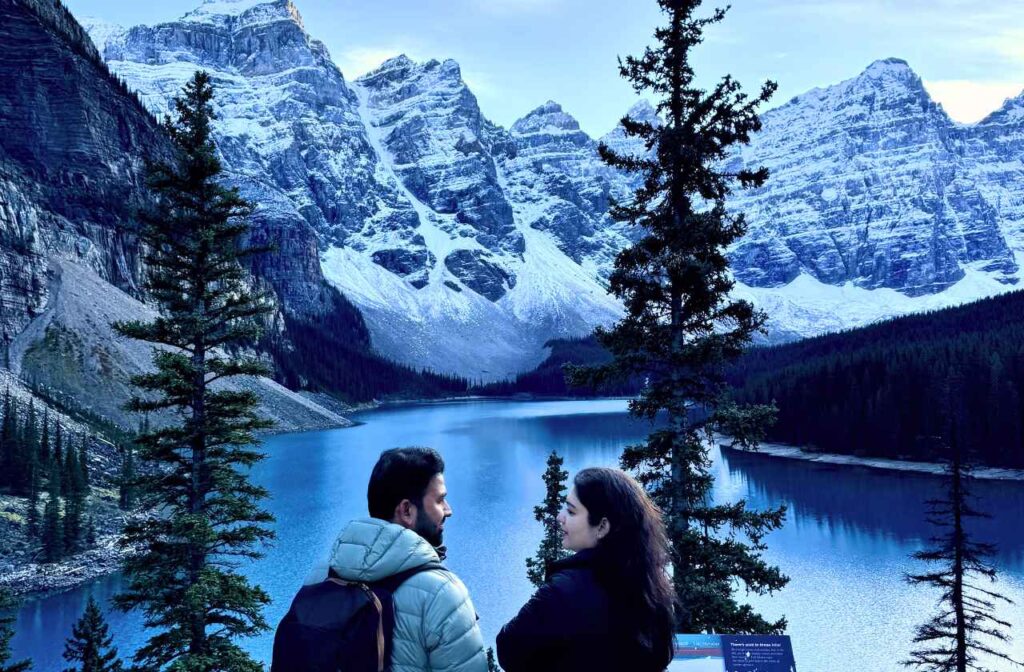
- Best Timings: Before sunrise for capturing the morning blush effect on the peaks. You can also enjoy calm water during this time sans the disruption caused by canoes. Get ready to be stunned by a unique display of colors during sunset. For the bluest hue, visit during July or August. Often photographers hike up to Sentinel Pass or rent a canoe to capture killer frames.
- How to Reach: Keep in mind it needs alot of planning to reach Lake Moraine. Take the Trans Canada and get down at Lake Louise. Next you can take a shuttle or bus tour to Moraine Lake. No private vehicles are permitted except the ones with special able tags.
Lake Louise
Lake Louise never fails to mesmerize photographers with its towering peaks and emerald waters. It offers multiple photo opportunities of the alpine vistas and reflection shots in the water. Irrespective of your season of visit, you are bound to fall in love with nature’s bounty at Lake Louise. The lake is surrounded by colossal Banff mountains on all sides. It has gained popularity for the deep blue color derived from fine rock particles that refract light. However, the lake remains frozen from October to late May.
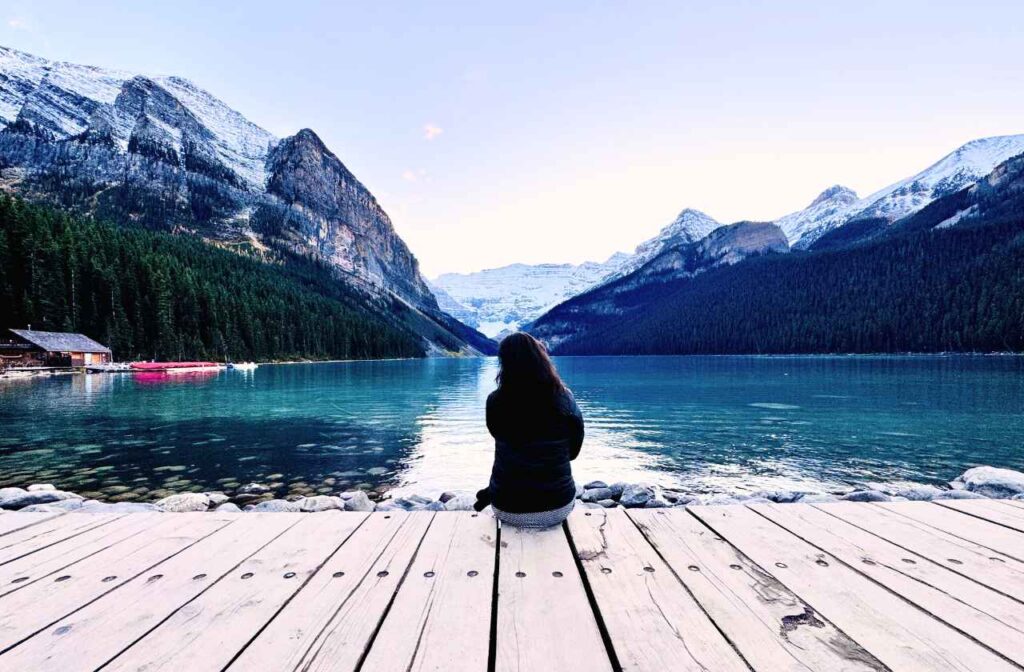
- Best Timings: Relish the beauty of the peaks painted in soft light during sunrise. The lake’s glow is enhanced during the afternoon from higher trails. Lake Louise remains thawed between June and September. Visit on winter mornings to capture the beauty of the frozen foregrounds. If you wish to avoid crowds, then visit either before sunrise or after 7pm in the evening.
- How to Reach: Take the Trans Canada and get down at Lake Louise. You can drive your car to the parking spot of Lake Louise. Parking space remains extremely limited, so take the Lake Louise Shuttle during summer months for hassle-free sightseeing.
Peyto Lake (one of our favorite lakes in Banff)
The turquoise waters of Peyto Lake receive their hue from glacial rock flour. The lake nestles against dramatic peaks that run along the Icefields Parkway. This alpine gem offers year-round photo opportunities sans the massive crowd at Moraine Lake. You can reach the Peyto Lake viewpoint following a short uphill hike.
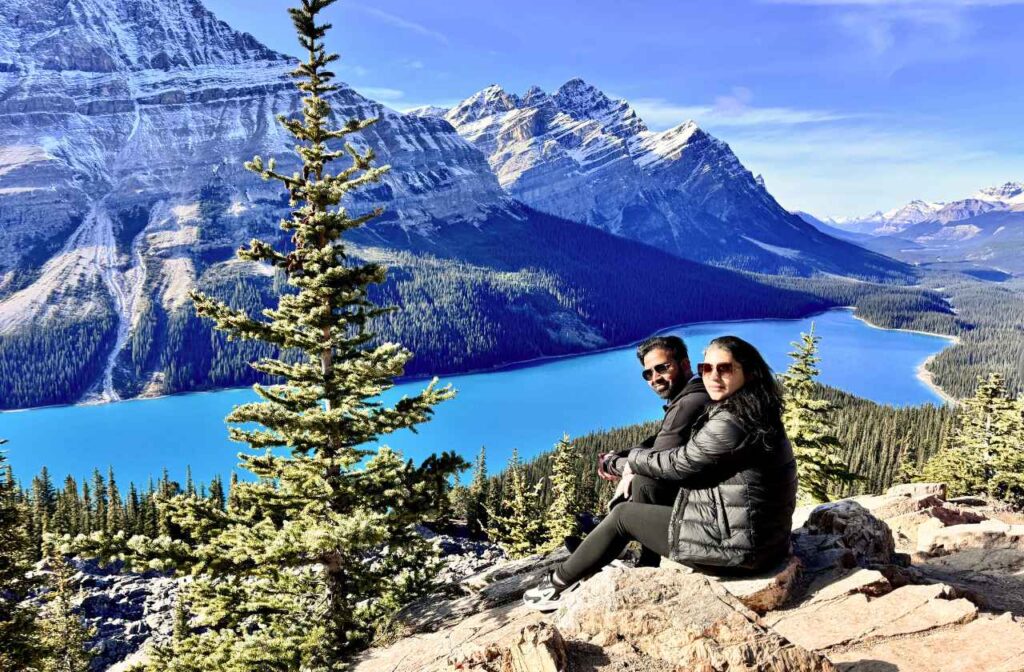
- Best Timings: Summer months yield the best results. The lake transforms into a brilliant shade of blue fed by Peyto Lake. Early morning glow is perfect for long exposures. You can also capture the warm alpenglow on peaks during late afternoons. Often travelers queue to visit after the first snowfall. During this time the lake remains covered in snow, but you can still make out the brilliant blue hue.
- How to Reach: Keep driving along the Icefields Parkway while going to Jasper from Banff, and you will soon reach Peyto Lake on your left side. Peyto Lake is situated at a small distance from Bow Lake.
Two Jack Lake
Two Jack Lake is the top choice of photographers who want to enjoy the blend of dramatic peaks and serene waters. You can reach it following a short drive from Downtown. It offers excellent swimming and canoeing opportunities for adventure junkies. You can enjoy magnificent views of Mount Rundle from the shores of Two Jack Lake.
- Best Timings: Sunrise for a pink alpenglow over the water and cotton-candy sky views during sunset.
- How to Reach: Drive towards Lake Minnewanka on the Lake Minnewanka Loop Road. You can pull off at Two Jack Lake along the way.
Lake Minnewanka (one of the largest lakes in Banff)
Lake Minnewanka, one of the largest lakes in Banff, entices photographers with its glacier-carved waters. You can reach it following a ten-minutes drive from Banff town. The 21 km long lake has a depth of 142 meters. It is a popular source of hydroelectric power in Banff. The lake draws tourists during summer months. People come for picnics, hiking, and canoeing. It transforms into a magic snow land during winter.
- Best Timings: It receives a lot of footfall during summer. But if you can come in early, then you can relish the beauty of illuminated Ha Ling Peak during sunrise. It radiates a magical alpenglow over the calm waters, which in turn provides an excellent photo opportunity for taking reflection shots. For some northern lights photography, you can visit during the night. The lake freezes during winter, offering scope for ice skating.
- How to Reach: Get on the Minnewanka Loop Drive from Banff, and the lake will fall along the way. While driving to Lake Minnewanka you can stop at Cascade Ponds, Johnson Lake, and Two Jack Lake along the way.
Bow Lake
The mirror-like turquoise waters of Bow Lake never fail to stun photographers. Moreover, you can enjoy crisp reflections of Mount Thompson, Crowfoot Mountain, and the Bow Glacier. The lake turns into a vibrant shade of blue during summer months as the lake thaws. Tourists can’t get enough of the ample photo spots they get at Bow Lake. But if you are on the lookout for epic views, then you need to hike up the Bow Peak.
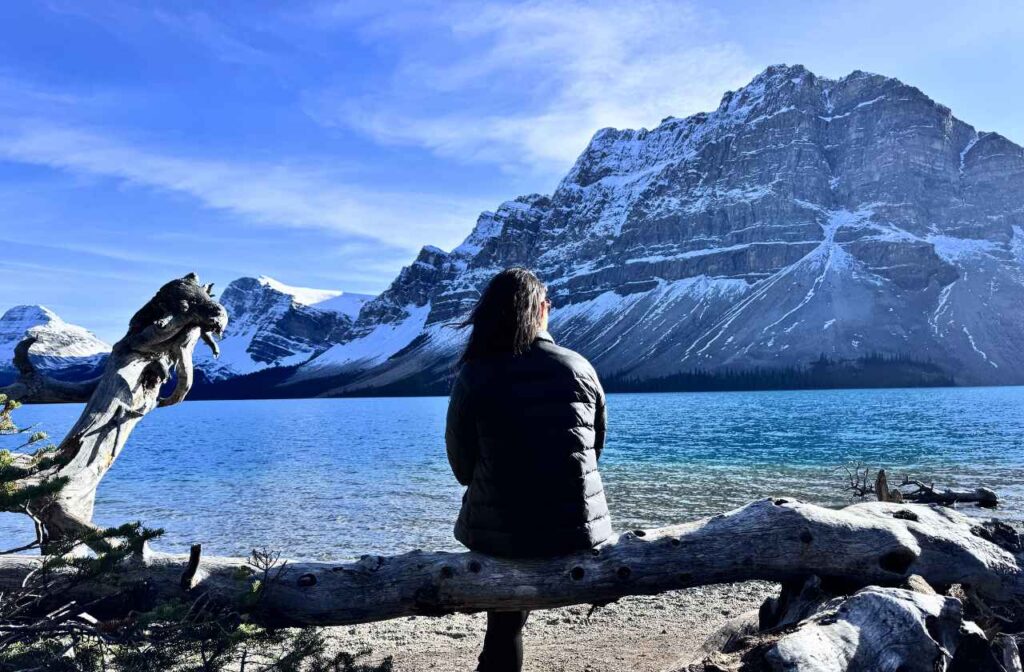
- Best Timings: The blue vibrancy of the lake maximizes during summer months due to glacial silt. But if you wish to capture seasonal variety and bypass the crowd, then winter might be your best bet.
- How to Reach: As you drive from Banff to Jasper along the Icefields Parkway, the Bow Lake will fall on your left. Park your vehicle at the Lodge at Bow Park.
Vermilion Lakes
Vermilion Lakes is the best stoppage that you will find in the west of Banff town. The ever- flowing water in the lake comes from the Canadian Rockies Bow River. If you are a photographer, capture the view of the lake during the golden hours. The sublime landscape and that sudden wildlife encounter, imagine clicking those moments! Believe me this is one of the most photogenic lakes in Banff.
This place is home to several wild lives like mule deer and elk; if you are lucky, you might meet a moose or a furry bear. Sit and relax.
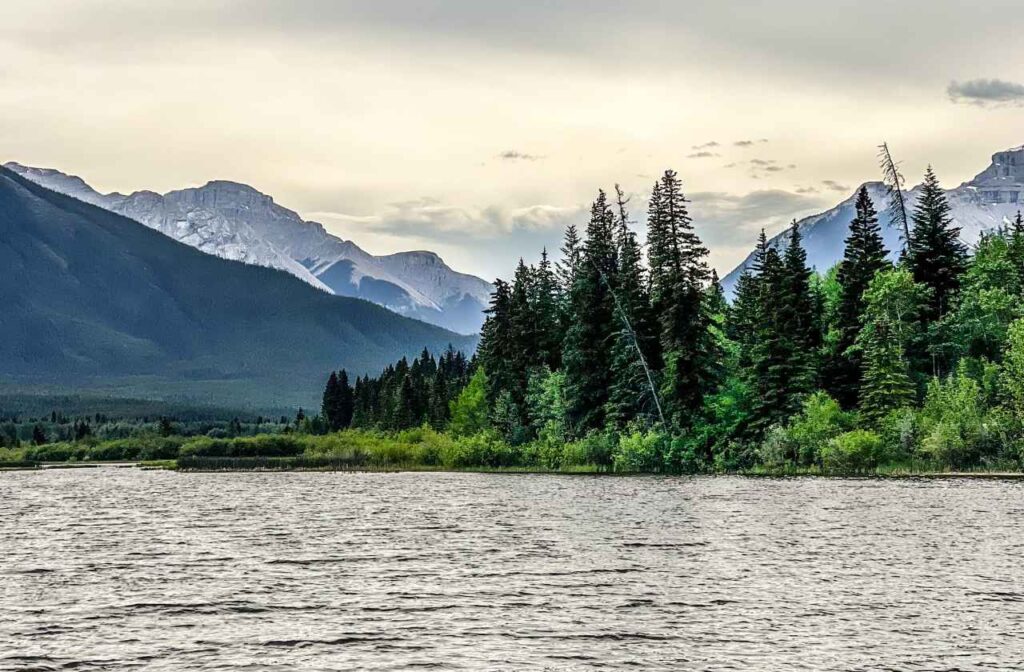
- Best Timings: Both in the winter as well summer, sunrise is a great time to photograph the lakes.
- How to Reach: When driving from Canmore to Banff, exit on the second exit towards Banff. Right after you turn off, take a right immediately to drive Vermilion Lakes Road.
Waterfowl Lakes
Waterfowl Lakes- a must-stop when you are driving the Icefields Parkway. Get ready to enjoy beautiful reflections of Mount Chephren and Howse Peak at the roadside stop of Waterfowl Lakes. But make sure to visit it early in the morning to enjoy the calm water. Hiking enthusiasts can walk through a 1.4 km long nature trail to Upper Waterfowl Lake to enjoy the wildflowers. Waterfowl lakes is comparitively unknown but also one of the most beautiful lakes in Banff.
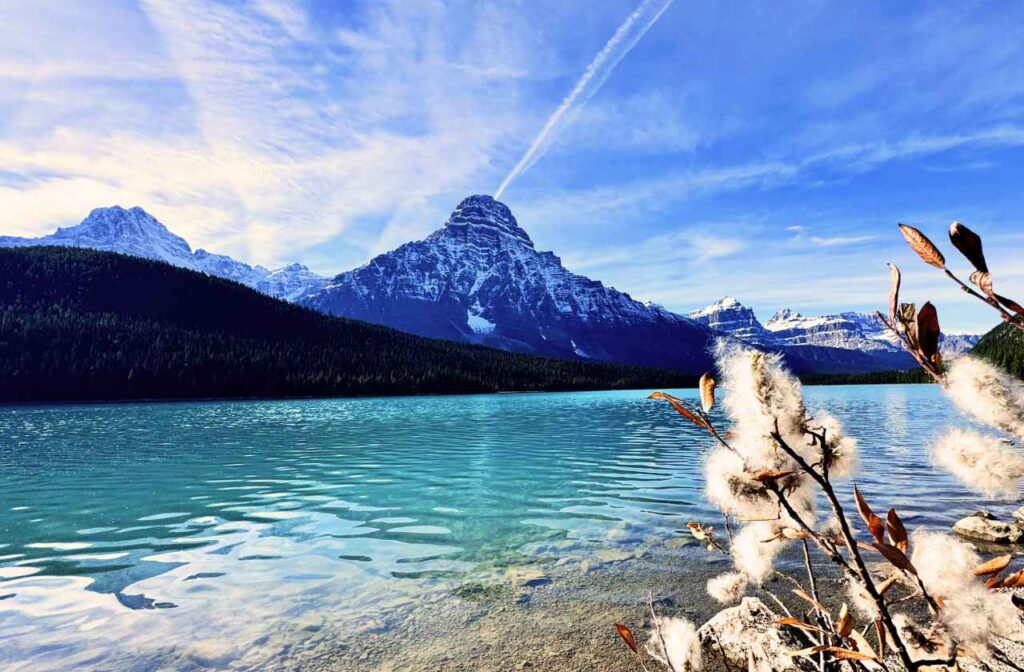
- Best Timings: Both in the winter as well summer, sunrise is a great time to photograph here.
- How to Reach: When driving on Icefields Parkway, keep an eye out for Waterfowl Lakes Campground. You will find few pull off points next to Waterfowl Lakes.
Herbert Lake
The small Herbert Lake with its calm water offers scenic reflections of Mount Temple. It is the first lake which you will see while driving from Banff to Jasper. You can gaze at the stunningly beautiful waterfront without getting down from your car.
For a closer view its advisable to park your car and take a walk around the lake. The warmer water of Herbert Lake makes it the top spot for swimmers. If you have a camera handy then don’t forget to capture those picturesque frames during sunrise and sunset.
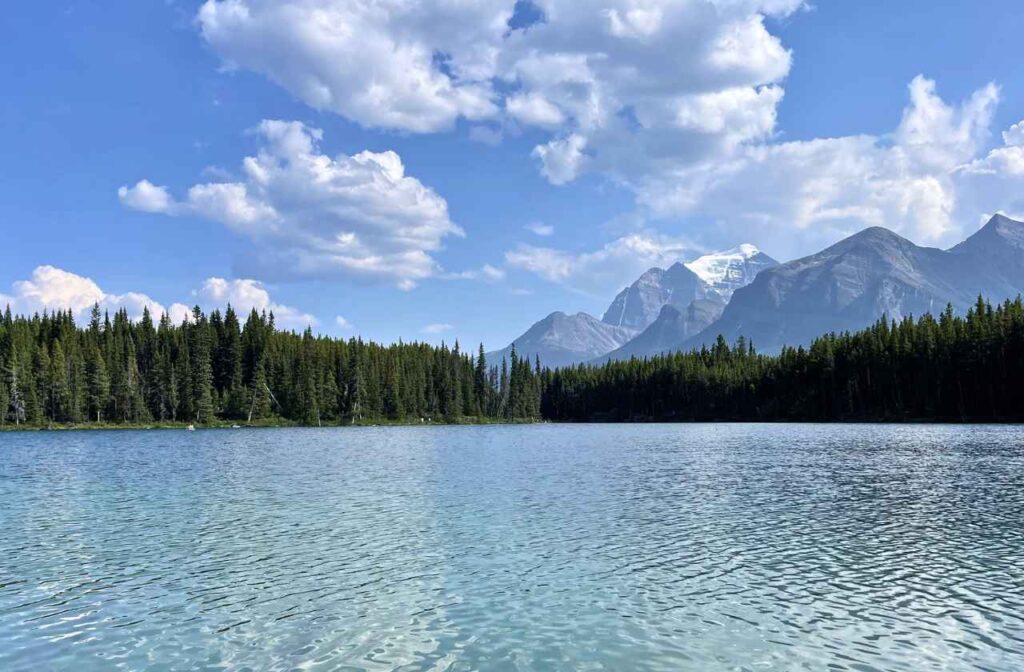
- Best Timings: Sunrise and sunset is the best time.
- How to Reach: When driving from Banff to Jasper, Herbert Lake is the first lake on your left hand side.


